
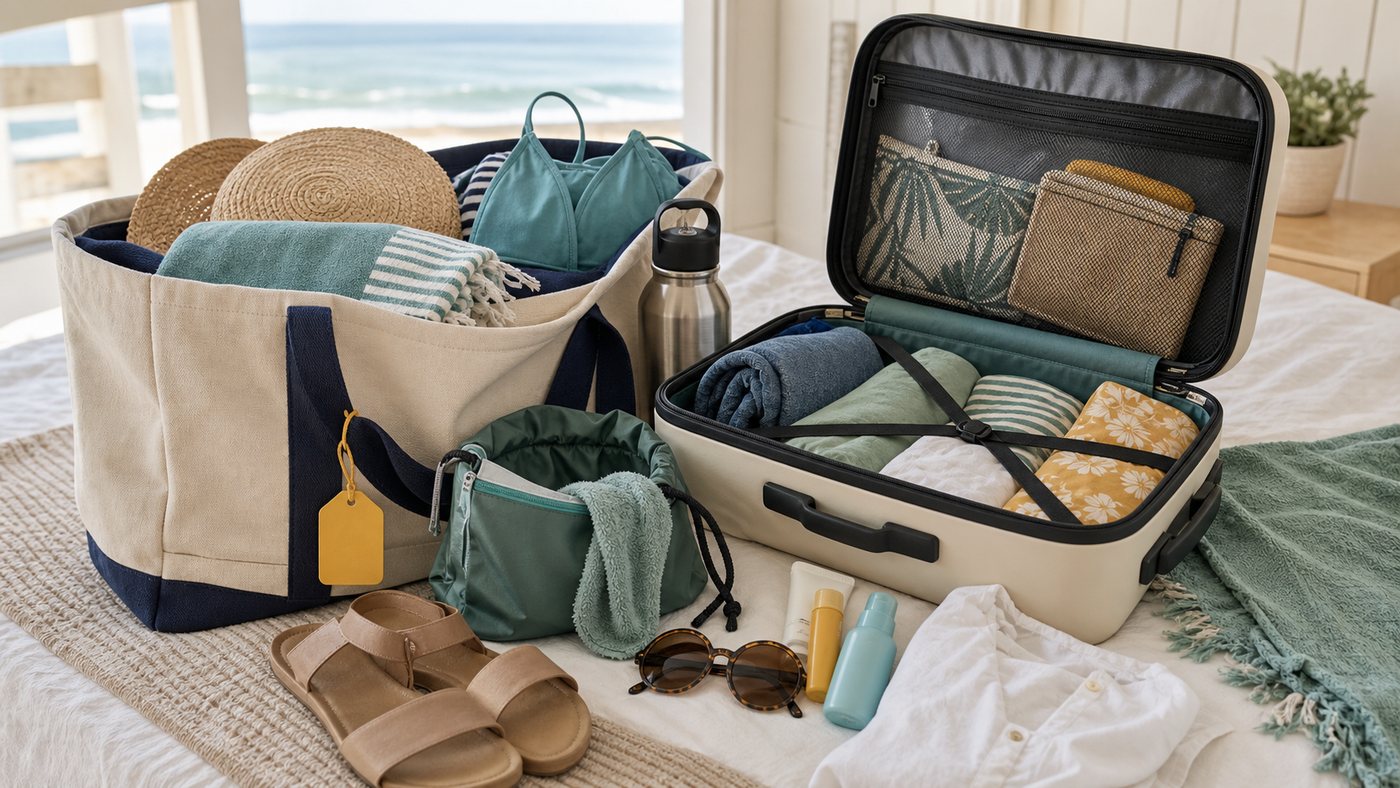
Beach trips need sun and wet-item planning more than extra outfits. Pack for changing, drying, and protecting essentials.
Create a beach pouch
Swimsuit, towel, sandals, sunscreen, sunglasses, sun hat, wet bag, and water bottle form the beach core. Keep phone, cards, and keys in a separate protected pouch.
If lodging provides towels or beach gear, remove bulky duplicates.
Plan for the evening
After the beach, you still need normal clothing, toiletries, medicine, chargers, documents, and sleepwear. Do not let beach gear crowd out daily essentials.
A lightweight layer is useful for cool evenings or air-conditioned rooms.
Handle wet returns
A wet bag or extra pouch keeps damp clothes and swimwear from spreading through the suitcase.
How to make the list useful
Beach packing has two zones: wet gear for the sand and dry essentials for travel and evenings. Mixing them causes most bag chaos.
- Swimsuit, sandals, towel, wet bag, and sunscreen
- Sunglasses, sun hat, and water bottle
- Dry outfit and evening layer
- Documents, medicine, and charger
What to remove before closing the bag
Check whether lodging provides towels, chairs, toys, or beach equipment. Removing one bulky duplicate can save more space than trimming several shirts.
A shorter list is not automatically better, but every item should have a reason tied to the trip. If an item is easy to replace, provided by lodging, not allowed by the program, or unlikely to be used, it should be removed before essentials are cut.
Real-world packing check
Pack a beach pouch that can leave the room without opening the suitcase. Keep cards, keys, and phone protected from sand and water.
Before leaving, do one final pass by routine: travel day, arrival, first night, first morning, main activity, hygiene, medicine, charging, and the return home. That routine check catches more problems than rereading a generic alphabetical list.
Quick reference
- Keep documents, medicine, phone, wallet, keys, and chargers accessible.
- Pack clothing by days and activities, then reduce bulky duplicates.
- Use a separate place for dirty, damp, or return-trip items.
- Verify current airline, camp, TSA, FAA, CDC, and destination guidance when rules matter.
Starter checklist
- Confirm trip length, luggage type, weather, and the activities that are actually on the schedule.
- Pack documents, medicines, chargers, wallet, keys, and phone in the bag that stays with you.
- Choose clothing quantities by day, then reduce bulky duplicates such as shoes, jackets, and full-size toiletries.
- Add one small first-day kit so arrival does not depend on unpacking every bag.
- Check official airline, camp, TSA, FAA, CDC, and destination rules before packing anything that may be restricted.
Common mistakes to avoid
The easiest way to overpack is to add every just-in-case item before the essentials are finished. Pack essentials first, then recommended items, then optional extras only if there is room and a clear use case. The easiest way to underpack is to forget routines: morning, activity, shower, medicine, sleep, travel day, and the return home. Walk through those routines once before closing the bag.
Use this with the generator
Open the packing list generator, choose the closest trip type, then adjust days, weather, luggage, travelers, and activities. Print or copy the result before you start packing so the checklist stays usable offline. If a category feels too large, remove optional extras first rather than deleting documents, medicine, chargers, or first-day essentials.